Overview
Are you looking for a reliable Medical Gas Pipeline System (MGPS) installation company for your hospital, nursing home, medical college, ICU, operation theatre, or healthcare facility? We provide complete Medical Gas Pipeline System (MGPS) solutions, including design, supply, installation, testing, commissioning, and maintenance services across India. Our team specializes in delivering safe, efficient, and standards-compliant medical gas infrastructure that ensures uninterrupted supply of oxygen and other medical gases to critical patient care areas. Whether you are constructing a new hospital, expanding an existing healthcare facility, or upgrading an outdated oxygen distribution network, we offer customized MGPS solutions tailored to your requirements. A Medical Gas Pipeline System is the backbone of modern healthcare infrastructure. It enables the safe and continuous distribution of life-saving medical gases throughout the hospital from a centralized source. Instead of manually transporting cylinders between departments, hospitals can deliver oxygen and other gases directly to patient beds, ICUs, operation theatres, emergency wards, and recovery rooms.
Available Systems & Specifications
Scroll horizontally or use controls to explore system configurations and technical specifications.
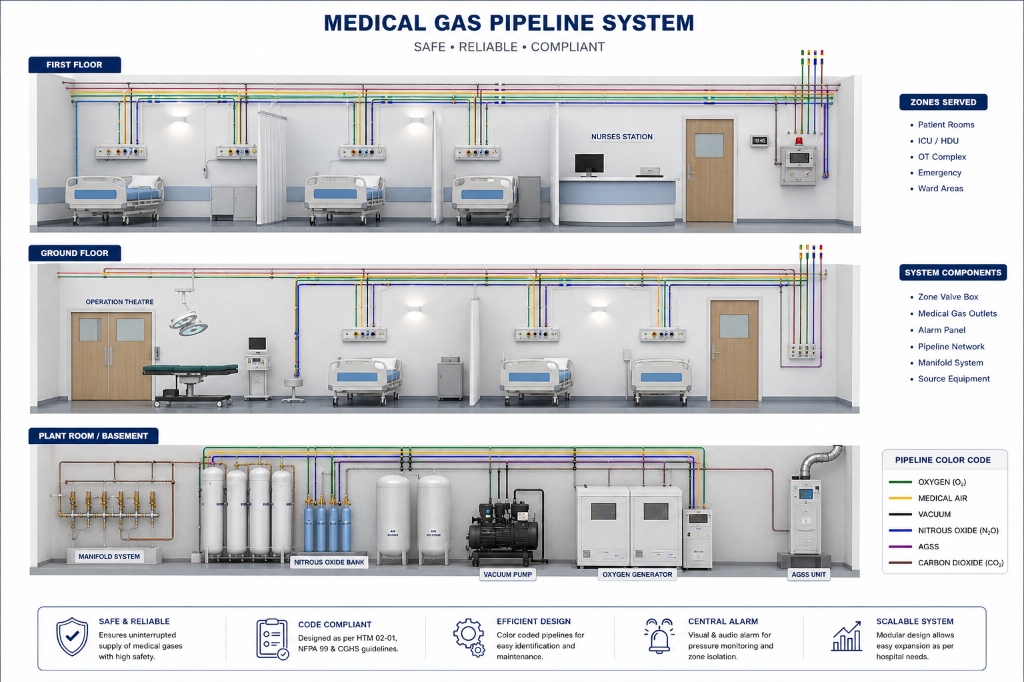
Medical Gas Pipeline System
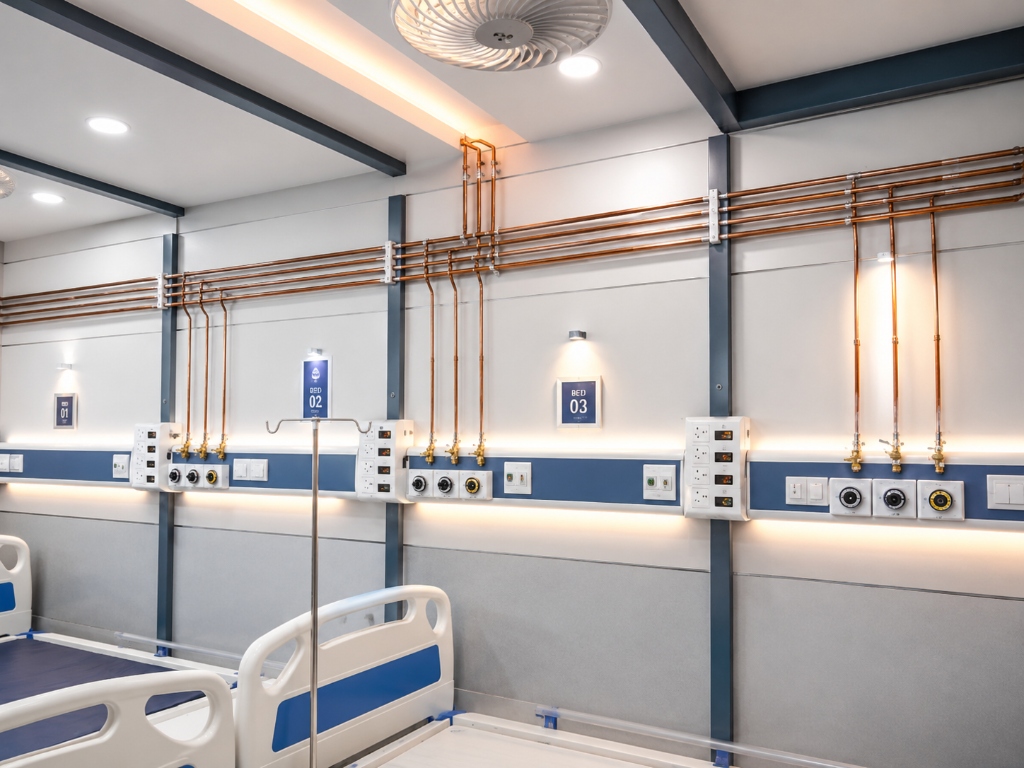
Oxygen Gas Pipeline System
Key Features & Scope
Medical Gas Pipeline System (MGPS)
Oxygen Gas Pipeline System
Central Medical Gas Pipeline System
Medical Oxygen Pipeline Installation
Medical Gas Copper Pipeline Installation
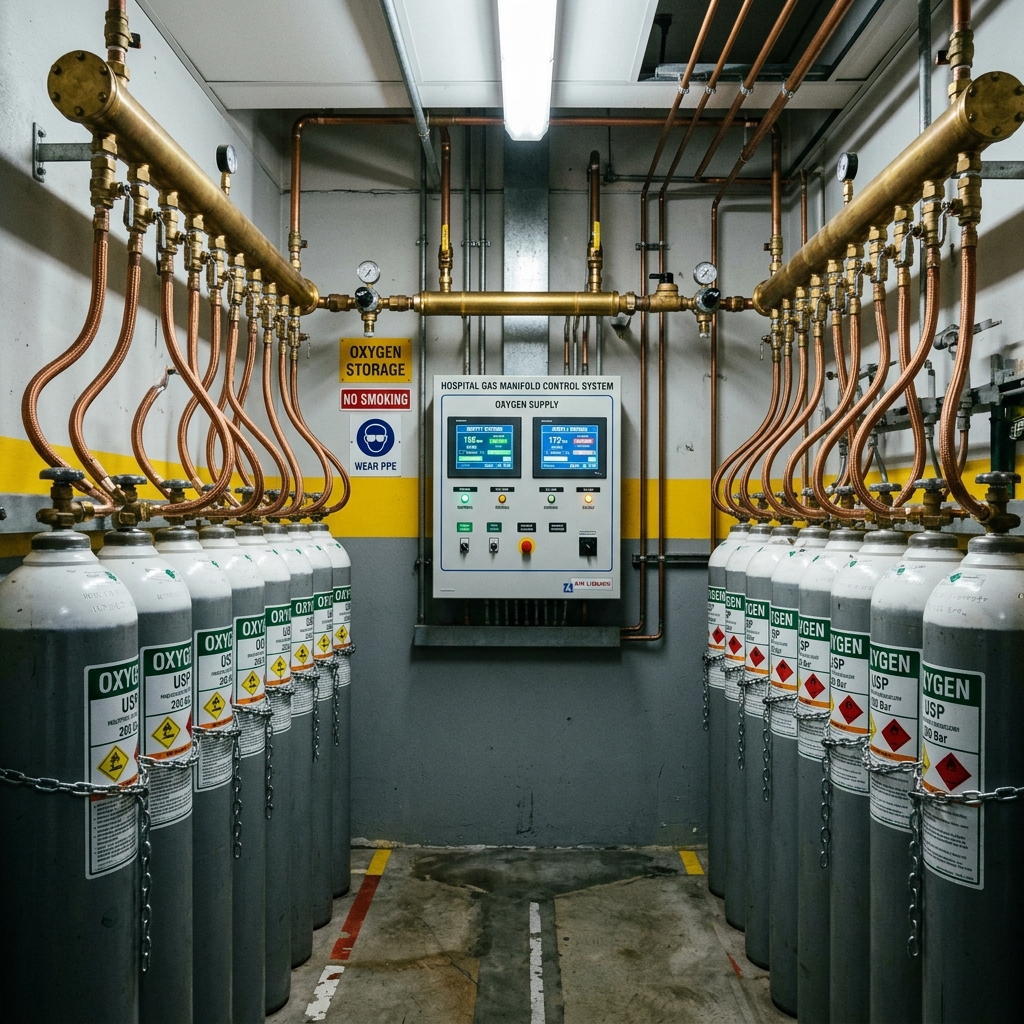
Oxygen Manifold Systems
Vacuum Pipeline Systems
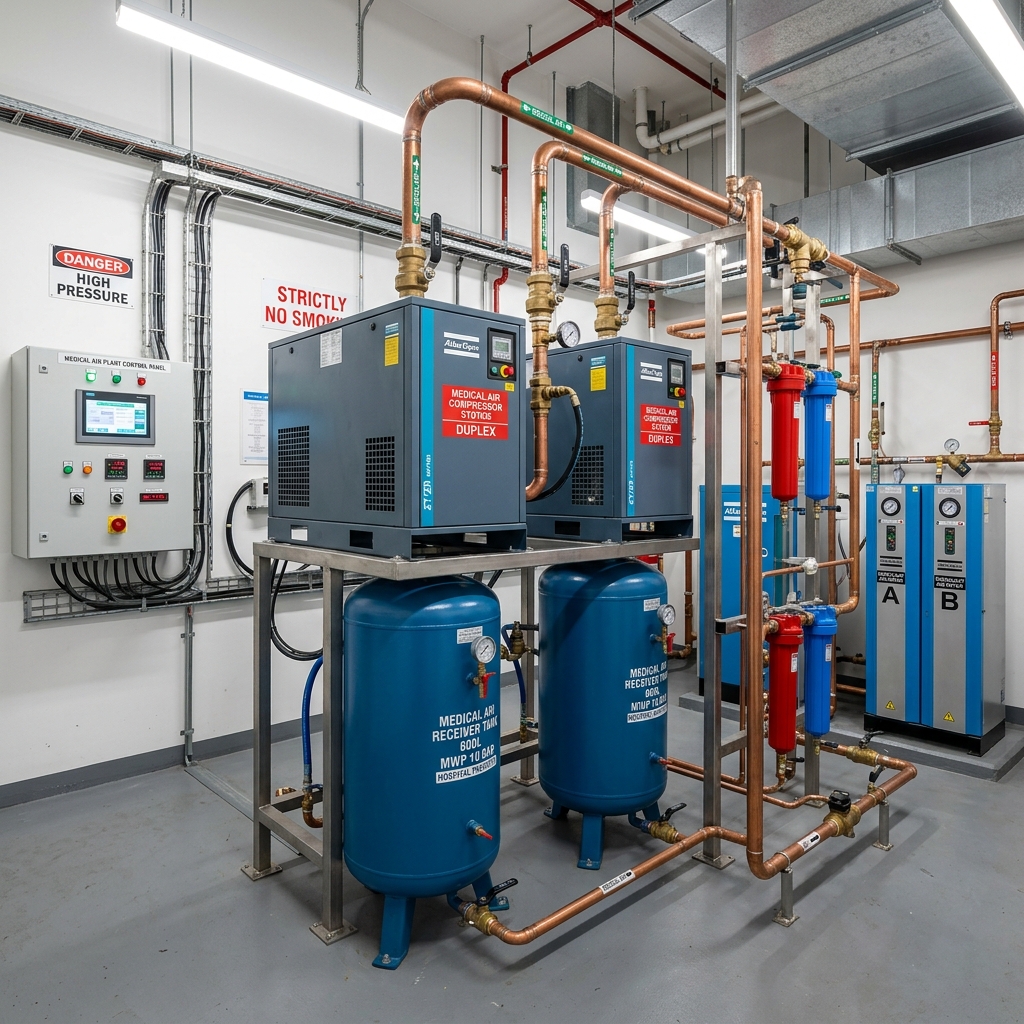
Medical Air Pipeline Systems
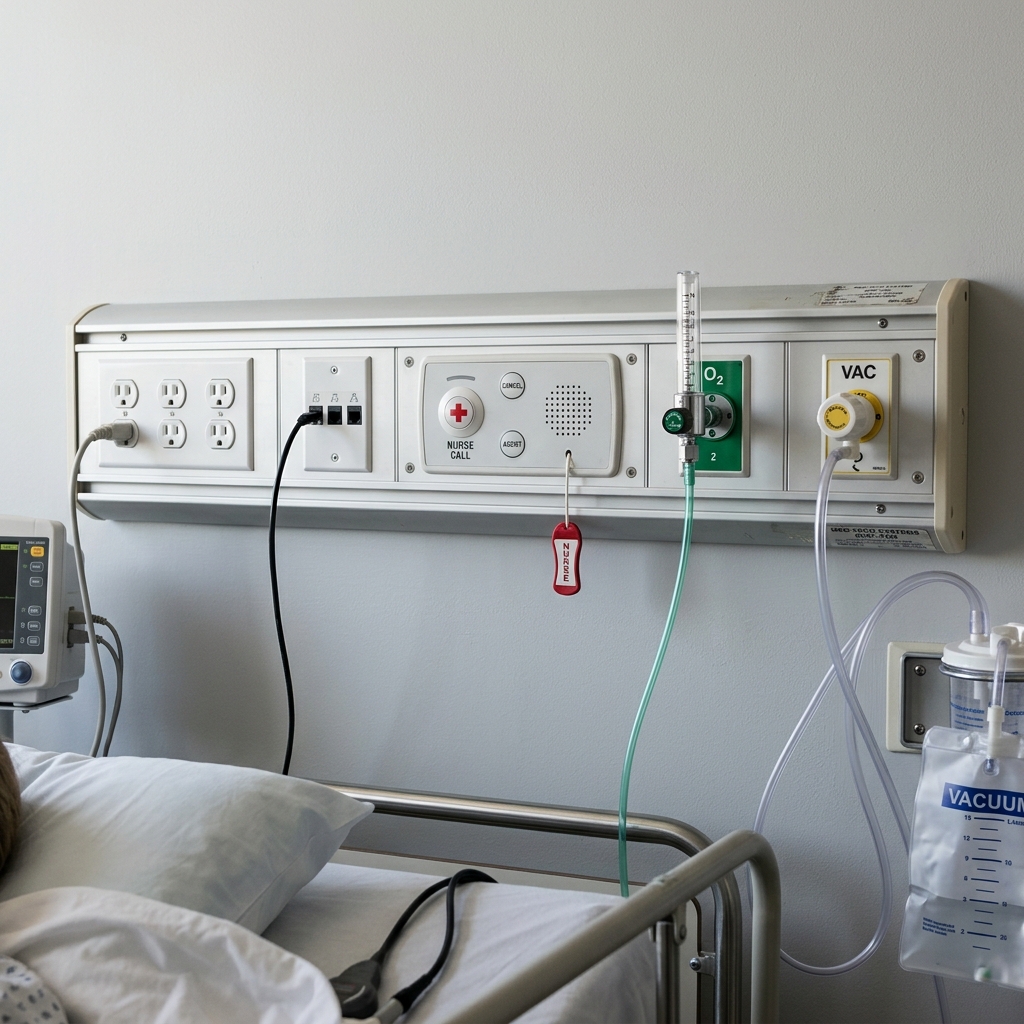
Bed Head Unit Installation
Medical Gas Alarm Systems
Isolation Valve Boxes
Medical Gas Outlets
ICU Gas Pipeline Systems
Operation Theatre Gas Pipeline Systems
Emergency Ward Oxygen Systems
Products Supplied with Modular OT
This comprehensive solution package incorporates the supply, positioning, and integration of the following equipment. Click any product to view full specifications:
Benefits
- ✓
Continuous Oxygen Supply: Centralized storage ensures oxygen is always available at bedside panels without manually changing cylinders.
- ✓
Enhanced Patient Safety: Oil-free air systems, automatic manifolds, and degreased copper lines prevent system contamination.
- ✓
Reduced Operational Costs: Centralized distribution minimizes gas waste, cylinder rental fees, and manual labor costs.
- ✓
Improved Workflow Efficiency: Eliminates the need to transport heavy high-pressure cylinders across hospital wards.
- ✓
Centralized Monitoring: Area valve units and digital alarm panels provide real-time pressure monitoring and emergency warnings.
- ✓
Emergency Backup Support: Automatic manifolds switch to reserve manifolds immediately during any primary pressure drops.
- ✓
Compliance with Healthcare Standards: All systems are designed and tested according to HTM 02-01, ASTM, ISO, and NABH guidelines.
Process / Implementation
Our structured installation process includes: Step 1: Site Inspection — Detailed assessment of hospital requirements and infrastructure. Step 2: System Design — Customized pipeline layout and engineering plans. Step 3: Material Procurement — Use of certified medical-grade components. Step 4: Installation — Professional installation by trained technicians. Step 5: Pressure Testing — Comprehensive leak testing and quality verification. Step 6: Commissioning — System activation and operational validation. Step 7: Maintenance Support — Ongoing inspection and technical assistance.
* Note: All engineering installations comply with NABH, ISO, and national healthcare regulations. Comprehensive quality validation reports are generated post-commissioning.
Industries Served
Why Choose Bio Meditech
Experienced Engineering Team: Our specialists have extensive experience in healthcare projects and hospital gas systems.
High-Quality Materials: We use premium-grade copper pipelines, certified valves, regulators, and alarm systems.
Customized Solutions: Every hospital has unique requirements. We design systems according to bed capacity and growth.
Safety First Approach: All installations undergo rigorous pressure testing and quality inspections before commissioning.
Pan India Project Execution: We provide design, installation, and support services for projects across India.
After-Sales Support: Our team offers maintenance, inspection, and troubleshooting to ensure long-term performance.
Frequently Asked Questions
Why does Bio Meditech emphasize BS EN 13348 copper piping for MGPS?
Standard industrial copper pipes contain residual manufacturing oils that can ignite when exposed to high-pressure oxygen, and they oxidize easily, leaving black soot. BS EN 13348 specifies degreased, medical-grade copper pipes that are clean-packed to prevent internal contamination, ensuring patient safety and chemical compatibility.
What is the function of an Automatic Oxygen Control Panel?
The control panel monitors the pressure of the operating gas bank. When pressure drops below a set threshold (indicating the primary cylinder bank is depleted), the panel automatically switches to the reserve cylinder bank and triggers an alert, guaranteeing a continuous flow of oxygen without manual intervention.
How is a medical gas system tested for cross-connections?
During commissioning, we perform a strict cross-connection test. We pressurize only one gas line (e.g., Oxygen) at a time and check every terminal outlet in the hospital. Only the corresponding oxygen outlets must discharge gas. This process is repeated for Nitrous Oxide, Medical Air, and Vacuum to ensure no lines are mixed.
What standards govern medical gas pipeline installations in India?
In India, corporate hospitals and government tenders require compliance with UK NHS Health Technical Memorandum HTM 02-01, ISO 7396-1, or the American NFPA 99 standard. Bio Meditech designs and executes all pipeline systems to meet or exceed these standards, facilitating smooth NABH audits.
How often should a medical gas pipeline system be serviced?
Central equipment (compressors, vacuum pumps) requires weekly inspections and monthly filter checks. The pipeline terminals, alarms, and manifold changeovers should undergo detailed testing every six months. Bio Meditech offers preventive maintenance plans to handle these routine safety audits.
Why is nitrogen purging necessary during the brazing process?
When copper is heated in the presence of oxygen, it forms black copper oxide scale on the inside of the pipe. When gas flows, this scale breaks off and can clog ventilator valves or be inhaled by patients. Purging the pipe with dry nitrogen gas displaces oxygen, preventing oxidation entirely.
Do you supply medical air compressor systems?
Yes, we supply and commission fully integrated, oil-free medical air compressor packages. These systems include multi-stage compressors, desiccant air dryers, pre-filters, carbon filters, and sterile filters to deliver dry, clean, medical-grade air for patient ventilation.
Can Bio Meditech integrate the MGPS with the building management system?
Yes. Our digital control panels and electronic alarm systems include telemetry options (such as Modbus or dry contact outputs) that easily link to your hospital's central Building Management System (BMS) for remote monitoring.
Related Solutions
Locations Served
Bio Meditech delivers turnkey healthcare infrastructure solutions, equipment supply, and engineering installation services in: